
William Harden
Colonel William Harden: The Ranger of the Lowcountry
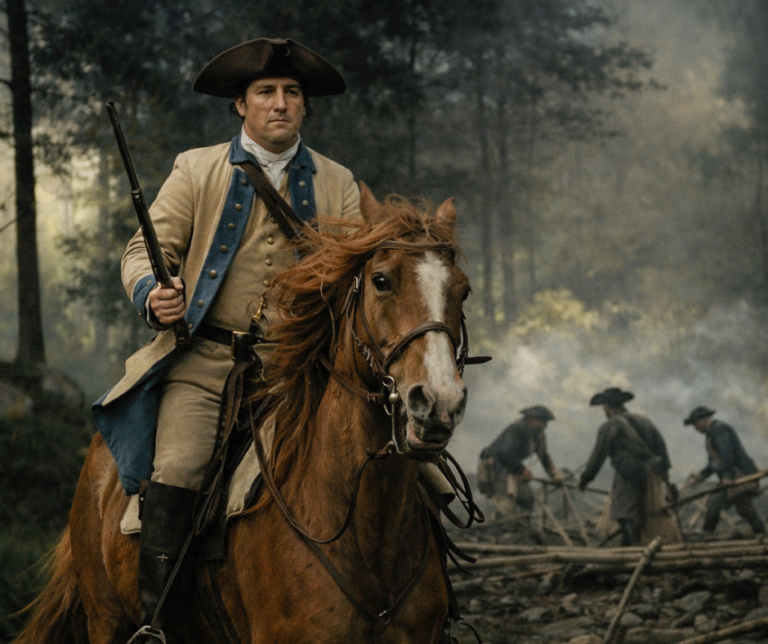
William Harden (1743–1785) was the defining partisan leader of the southern Lowcountry, emerging from the “swamps and sandy woods” of the Beaufort District to lead one of the most effective irregular commands in the Revolutionary War. While less famous than Francis Marion, Harden was the primary force that kept the Patriot cause alive in the strategically vital territory between the Savannah and Combahee Rivers during the darkest years of British occupation.
The Rise of “Harden’s Rangers”
In the wake of Charleston’s fall in 1780, Harden initially refused to take a British loyalty oath and went into hiding. By late summer, he emerged as a guerrilla commander, commissioned by Governor John Rutledge to lead a mobile force of “mounted militia” drawn from the plantations and pine forests of modern-day Jasper, Hampton, and Beaufort Counties. His unit, known as Harden’s Rangers, relied on hit-and-run tactics and an intimate knowledge of the tidal creeks and dense swamps to harass British rear areas while avoiding direct confrontation with superior forces.
The Strategic Victory at Fort Balfour
Harden’s most celebrated achievement occurred in March 1781 at Fort Balfour in Pocotaligo. The fort was a critical British asset, guarding a major river crossing and controlling access to the interior. With just 75 men, Harden enveloped the defenses under cover of darkness. In a testament to the fractured loyalties of the time, the fort’s defenders—many of whom harbored Patriot sympathies—mutinied against their officers and forced a surrender. This victory provided a massive morale boost and effectively disrupted British control over the Beaufort hinterlands.
A Leader of the People
Harden’s success was built on a network of local support that included not only white planters and small farmers but also enslaved individuals who served as vital scouts and guides through the treacherous terrain. His effectiveness was so great that when he was passed over for promotion to General in favor of John Barnwell in November 1781, his men famously refused to obey Barnwell, ultimately forcing Barnwell’s resignation. This fierce loyalty to Harden underscores his status as a “local hero” rather than a traditional military bureaucrat.
Final Years and Legacy
At the close of the war, Harden transitioned from soldier to statesman, serving as a senator at the Jacksonborough Assembly in January 1782. He lived out his final years as a respected landowner near Pocotaligo. Though he passed away in November 1785, his legacy remains anchored in the Beaufort District; he is believed to be interred at his plantation or within the historic Old Sheldon Churchyard.