Andrew DeVeaux
The Scourge of the Lowcountry
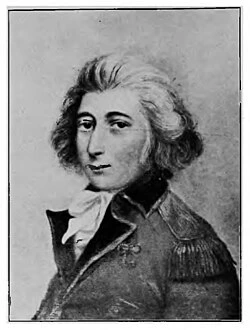
Andrew DeVeaux (1758–1812) was born to a prominent Beaufort family at their Laurel Bay plantation. While many of his peers joined the rebellion, DeVeaux remained a staunch and active Loyalist, driven by a deep conviction that the American cause was an affront to the social and economic order that had made the Lowcountry flourish. He did not merely support the Crown from the sidelines; he became one of the most effective and aggressive partisan leaders in the South.
The Destruction of Prince William Parish
DeVeaux’s military reputation was forged in fire. In 1779, he used his own plantation at Laurel Bay as a beachhead for British forces invading the Beaufort District. His local knowledge made him an invaluable guide, but it was his role in the destruction of Old Sheldon Church that cemented his notoriety.
Acting in retaliation for the Patriots using the church as a gunpowder magazine for General Washington’s army, DeVeaux and a band of Loyalists burned the magnificent structure, along with numerous nearby Patriot homes. To DeVeaux, this was a strategic strike against a rebel supply hub; to the local community, it was an act of sacrilege that transformed him into one of the most hated men in the Beaufort District.
The Royal Foresters and the Partisan War
Following the fall of Charleston in 1780, DeVeaux was commissioned as an officer in the Royal Foresters, a Loyalist regiment raised specifically for “peacekeeping” and counter-insurgency. He engaged in a brutal cycle of raids and reprisals, mirroring the tactics of the Patriot “Bloody Legion.” His operations were designed to make neutrality impossible, effectively turning the Lowcountry into a “People’s War” where control of the landscape was constant, bloody, and personal.
The Conquest of the Bahamas
As the war in the Carolinas wound down, DeVeaux achieved his most stunning military feat. In 1783, after the British had essentially lost the mainland, DeVeaux led a daring, self-funded expedition of Loyalist refugees from Charleston to the Bahamas. Using tactical deception and a small force of only a few hundred men, he bluffed the Spanish garrison at New Providence into surrendering. Without firing a single cannon shot, DeVeaux recaptured the islands for the British Crown, providing a new home for thousands of displaced Southern Loyalists.
Legacy of a Loyalist Exile
For his service, DeVeaux was granted extensive lands on Cat Island in the Bahamas, where he briefly attempted to replicate the Sea Island plantation model. However, he eventually retired to New York, living a life of luxury supported by his Caribbean holdings. He died in 1812 following a fall from a balcony, leaving behind a legacy as a brilliant but ruthless commander who fought to the very end for a lost cause.