
Augustine Prevost
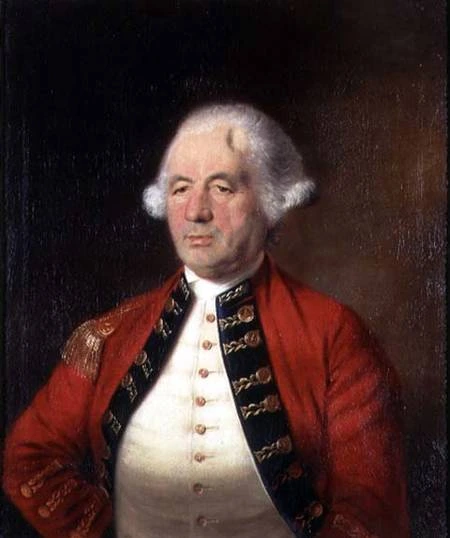
Major General Augustine Prevost: The Invader of the Lowcountry
Prevost was a veteran of the French and Indian War and had spent years commanding the British garrison in St. Augustine, Florida. In late 1778, he was ordered to move north and cooperate with a naval force to capture Savannah. Following the fall of Savannah in December 1778, Prevost assumed command of all British forces in the South, turning his sights toward the wealth of the South Carolina plantations.
The 1779 Campaign and the “War of Plunder”
In the spring of 1779, Prevost launched a bold overland advance toward Charleston. His army of 2,400 troops marched through the heart of the Beaufort District, crossing the Savannah River and moving along the inland roads. This campaign turned the district into a corridor of devastation; Prevost’s troops and Loyalist allies stripped plantations of livestock, provisions, and enslaved labor.
While his primary objective was Charleston, Prevost’s advance was plagued by delays. He faced a significant delay at the Coosawhatchie River, where a rear-guard action led by John Laurens forced him to halt his march temporarily. Simultaneously, his attempt to seize the town of Beaufort via a naval landing at Port Royal Island was thwarted by General William Moultrie at the Battle of Gray’s Hill.
The Defense of Savannah
Prevost’s greatest military achievement came later in 1779. When a massive combined French and American force laid siege to Savannah, Prevost refused to surrender. Despite being heavily outnumbered, he successfully held the city through a brutal three-week siege and repelled a final, bloody assault. This victory secured the British foothold in the South and set the stage for the fall of Charleston the following year.
Legacy of the Professional Soldier
Augustine Prevost was a methodical commander who understood that the Revolution in the South was as much about logistics and resources as it was about battles. His strategy of living off the land and stripping Patriot resources caused millions of pounds in property damage, leaving the Beaufort District “battered and divided.” He returned to England in 1780, leaving the southern command to Lord Cornwallis, but his 1779 campaign remained the blueprint for British operations in the Lowcountry.