
Edward Barnwell
A Legacy of Defiance
Edward Barnwell (1758–1808) was born into a lineage of Lowcountry defenders, but he forged his own reputation through a series of daring escapes and steadfast leadership. His service began in June 1775 at the age of eighteen, receiving one of the first commissions issued by the Provincial Congress. Initially serving as a Lieutenant in the South Carolina Provincials under Colonel Stephen Bull, Barnwell’s early career took him across the Savannah River to quell Loyalist uprisings in Georgia before returning to defend his native Beaufort District.
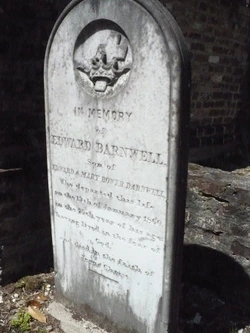
The Brother’s War and the Disaster at Matthews’ Plantation
Barnwell served as a First Lieutenant in a cavalry company commanded by his brother, Captain John Barnwell. Together, they played a pivotal role in routing British forces during the Battle of Port Royal Island in February 1779. However, the fortunes of war shifted on the night of May 20, 1779. While stationed at the Matthews’ Plantation on John’s Island, Barnwell’s company was betrayed by a Loyalist neighbor, Thomas Fenwick, who alerted the British to their position.
In the ensuing midnight “surprise,” the Patriots were overwhelmed. The engagement was marked by brutal close-quarters combat; Edward’s sixteen-year-old brother, Robert, was stabbed seventeen times with bayonets after attempting to surrender. In a remarkable act of loyalty and bravery, Edward’s body servant, Harry, rescued the wounded Robert from the field and carried him to safety. While Robert escaped, Edward and the rest of the company were captured and moved to the grim confines of the prison ship Packhorse in Charleston Harbor.
The Mutiny on the Packhorse
Life aboard the Packhorse was a test of endurance. In 1781, tensions reached a breaking point following the British execution of Colonel Isaac Hayne. Fearing they would be executed in a cycle of “Retaliatory Justice” between General Nathanael Greene and British leadership, Barnwell and 128 other prisoners signed a desperate plea for de-escalation.
The turning point came when the British ordered the Packhorse to sail for New York. Seeing a final chance for freedom, Edward Barnwell led thirty-five companions in a daring uprising. They overpowered the British guard, seized control of the vessel, and intentionally ran it aground off the coast of Halifax, North Carolina. After jumping ship, the group navigated the treacherous pine barrens of North Carolina on foot, eventually returning to the Beaufort District destitute but free.
Post-War Service and “The Castle”
Promoted to Lieutenant Colonel by the war’s end, Barnwell remained a central figure in South Carolina’s military structure. Though he briefly served in the state legislature, his most lasting physical legacy was “The Castle”—a massive tabby mansion he built in Beaufort with his brother, Robert. Barnwell continued his service into the War of 1812, eventually rising to the full rank of Colonel. He died in 1808, remembered as a man who survived the darkest hours of the Revolution through sheer force of will and a daring escape that remains one of the great maritime legends of the Lowcountry.