
Isaac Hayne
Colonel Isaac Hayne: The Martyr of South Carolina
Isaac Hayne (1745–1781) was a wealthy and influential planter from the Colleton District, known for his ironworks and his leadership within the local militia. Like many others, Hayne was captured during the Fall of Charleston in 1780 and was eventually forced to sign a declaration of allegiance to the British Crown to remain with his family during a smallpox epidemic that was ravaging his household. This “forced parole” would later become the central point of a tragic legal dispute that ended his life.
The Return to Arms and Capture
Believing that the British had failed to provide the protection promised in his parole agreement, and seeing the renewed Patriot momentum under General Nathanael Greene, Hayne returned to active duty in 1781. He was commissioned as a Colonel and led a daring raid that captured the turncoat Andrew Williamson just outside of Charleston.
However, his success was short-lived. During a pursuit by British cavalry, Hayne was captured. Because he had previously signed an oath of loyalty, the British command—led by Lord Rawdon and Nesbit Balfour—viewed him not as a prisoner of war, but as a traitor to the King.
An Execution that Ignited a Colony
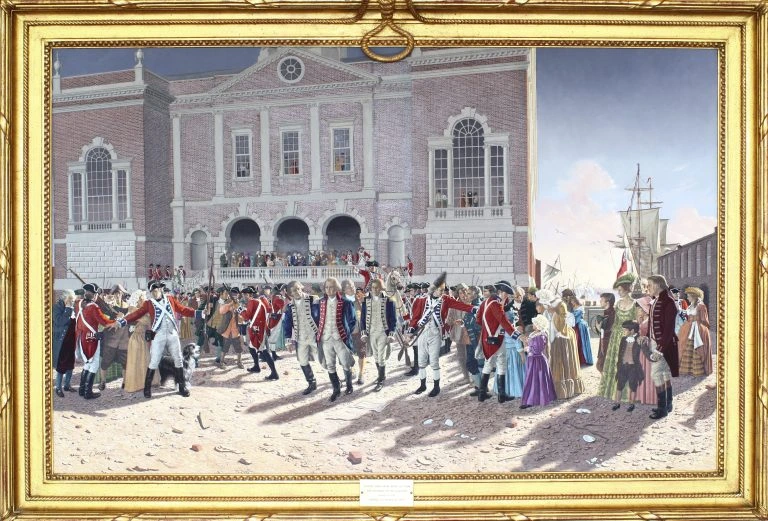
In a move intended to terrify other “paroled” Patriots back into submission, the British denied Hayne a military trial and sentenced him to death by hanging. On August 4, 1781, Hayne was marched to the gallows in Charleston. His calm and dignified demeanor in the face of death moved even the British soldiers present.
The plan to intimidate the population backfired spectacularly. Instead of fear, the execution sparked an explosion of outrage across the colonies. General Nathanael Greene threatened a policy of retaliation against British officers, and the “Hayne Case” became a rallying cry for Patriot forces from the Beaufort District to Philadelphia. The execution proved to the people of the Lowcountry that British “protection” was a thin veil for tyranny, driving hundreds of wavering citizens back into the Patriot fold.
Legacy of Sacrifice
Isaac Hayne’s death ensured that the British could never truly “win” the political war for South Carolina. He became a symbol of the impossible choices faced by Southern planters and a martyr whose name was invoked in every skirmish that followed. Today, his burial site in Jacksonboro stands as a quiet monument to a man whose execution became the catalyst for the final liberation of the state.