John Joyner
Commodore John Joyner: The Admiral of the Lowcountry
Originally from Gloucestershire, England, Joyner began his colonial career patrolling the waterways of Georgia and South Carolina as a commander of scout boats. By the mid-1750s, he had settled in Beaufort, establishing himself as an indigo planter and a pillar of the St. Helena Parish community. When the Revolution broke out, Joyner immediately put his maritime expertise to work for the Patriot cause, participating in the conflict’s very first naval actions in the South.
The Great Gunpowder Heist
In July 1775, Joyner—alongside Captain John Barnwell—commanded two armed barges from Beaufort to intercept the British supply ship Philippa off Tybee Island. In a daring joint operation with Georgia Patriots, they seized the vessel and its cargo of 16,000 pounds of gunpowder. This critical supply was divided between the southern colonies, with a portion famously sent north to aid George Washington’s Continental Army in the Siege of Boston. This early victory not only armed the rebellion but solidified Joyner’s reputation as a bold naval strategist.
Command of the Frigate South Carolina
As the war progressed, Joyner accompanied Commodore Alexander Gillon to Europe to acquire heavy warships for the state’s defense. He served as the second-in-command of the Frigate South Carolina, the largest and most heavily armed vessel of its kind in the American service. After Gillon was removed from command in 1782 due to legal and financial disputes, Joyner was given full command of the ship.
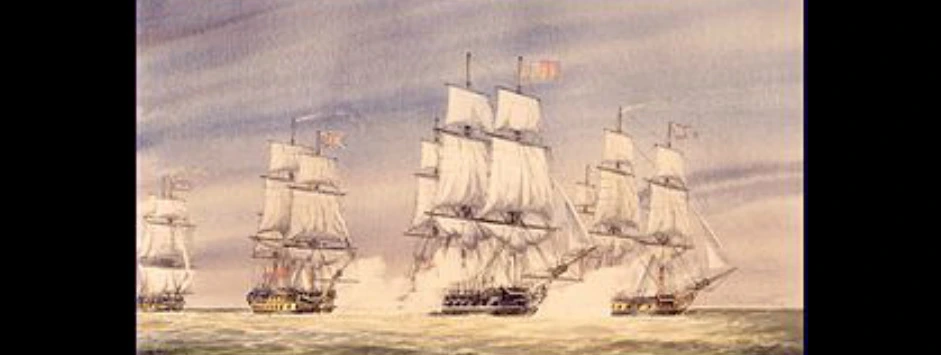
In the spring of 1782, Joyner led the South Carolina as part of a joint Spanish-American expedition that successfully recaptured the Bahamas from the British. However, the ship’s luck ran out in December 1782. While attempting to escape the Delaware Capes with an inexperienced crew, Joyner was intercepted by three British warships. After an 18-hour chase and a fierce two-hour bombardment, he was forced to strike his colors. He was taken as a prisoner to New York but was honorably acquitted by a South Carolina court of inquiry after the war, which recognized the impossible odds he had faced.
Post-War Legacy
Joyner returned to Beaufort as a celebrated local hero. In 1785, he purchased the land surrounding the abandoned Fort Frederick, transitioning into a successful cotton planter. He died in 1796 at the age of 77 and was buried in Beaufort, leaving behind a legacy as the man who secured the powder for the Revolution’s start and commanded its greatest ship at its end.