
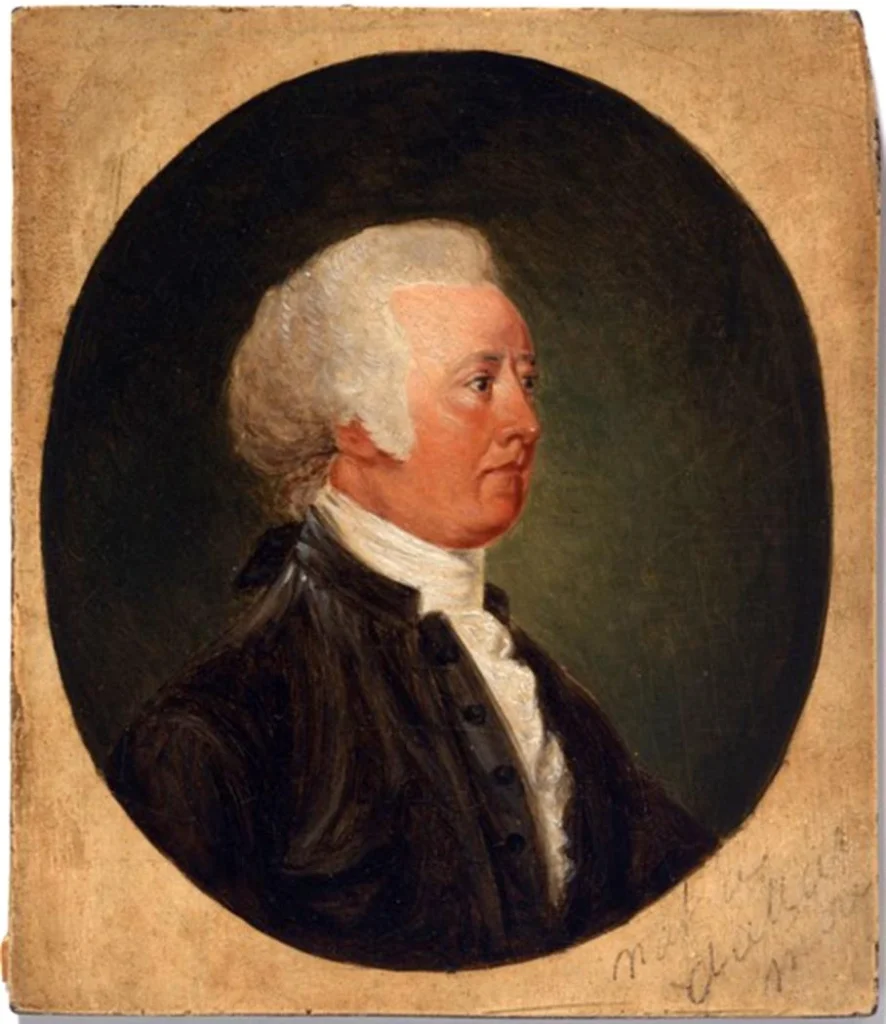
John Rutledge
Governor John Rutledge: The “Dictator” of the Republic
A brilliant lawyer educated at the Middle Temple in London, Rutledge was a conservative revolutionary who prioritized the rule of law even in the midst of chaos. In early 1780, as British forces closed in on Charleston, the General Assembly granted him near-absolute “dictatorial” powers to do whatever was necessary for the public good. He escaped the city just before it surrendered, spending the next two years on the move, narrowly evading British patrols while rebuilding the state’s military and political infrastructure from the backcountry.
Architect of the Partisan Strategy
Rutledge’s greatest contribution was his management of the irregular “People’s War”. He was the one who commissioned leaders like Francis Marion, Thomas Sumter, and William Harden, providing them with the legal authority to fight as state troops rather than mere vigilantes.
However, his relationship with these commanders was often tense. While he relied on their grit, he was a strict disciplinarian who frequently complained about the lack of order in their ranks. He famously wrote to General Nathanael Greene that while William Harden was a “brave Man,” his lack of discipline allowed his men to “do as they please,” leading Rutledge to eventually appoint John Barnwell over him to bring professional structure to the Southern militia.
The Jacksonborough Assembly
In early 1782, while the British still occupied Charleston, Rutledge called for the Jacksonborough Assembly to meet just thirty miles away. This was a masterstroke of political theater and substance; it proved the state government was alive and functioning. Under Rutledge’s guidance, the assembly passed the “Confiscation and Amercement Acts,” punishing Loyalists like Daniel Horry and Nicholas Lechmere while rewarding Patriot service with land and recognition.
Legacy of the “First President”
After the war, Rutledge’s influence went national. He was a delegate to the Constitutional Convention, where he chaired the Committee of Detail that wrote the first draft of the U.S. Constitution. He served as the Chief Justice of the South Carolina Supreme Court and briefly as the Chief Justice of the United States. He died in 1800, remembered as the man whose unwavering administrative hand prevented the total collapse of South Carolina during its darkest hour.