
Nathanael Greene
Major General Nathanael Greene: The Savior of the South
Nathanael Greene (1742–1786) took command of a shattered and starving Southern Army in December 1780. Facing a superior British force under Lord Cornwallis, Greene realized that a traditional, head-on war was a recipe for disaster. Instead, he pioneered a brilliant strategy of “mobile war”—using the rugged terrain of the Carolinas to exhaust the British army, stretching their supply lines until they snapped.
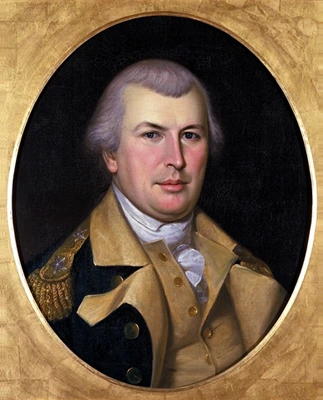
The Master of the Strategic Retreat
Greene’s genius lay in his ability to lose battles while winning the war. He famously remarked, “We fight, get beat, rise, and fight again.” By dividing his forces and cooperating with partisan leaders like Francis Marion and Thomas Sumter, he forced the British to chase him across the “Dan River” and through the Carolina backcountry.
While the British won tactical victories at places like Guilford Courthouse, the cost in men and materiel was so high that Cornwallis was forced to abandon the interior and retreat toward the coast. This “war of attrition” effectively stripped the British of their hold on the South Carolina Lowcountry, pinning them into small coastal enclaves like Charleston and Beaufort.
Restoring Order to the Lowcountry
Beyond his military maneuvers, Greene played a crucial role in the political survival of South Carolina. He worked tirelessly to suppress the “Partisan War” between neighbors, urging a return to civil law. In 1782, he presided over the Jacksonborough Assembly, the first meeting of the South Carolina legislature since the fall of Charleston. It was Greene’s protection that allowed the Patriot government to reconvene just miles from British-occupied territory, signaling that the Royal cause was truly lost.
A General’s Reward and Final Days
In gratitude for his service, the state of South Carolina granted Greene Boone’s Barony, a massive estate south of the Edisto River. Though he was a New Englander by birth, Greene spent his final years struggling to rebuild the plantation economy he had helped liberate. He died in 1786 at the age of 44, leaving behind a legacy as the strategist who out-thought the British Empire and secured the independence of the American South.