
Thomas Brown
The Making of a Loyalist Enigma
Few figures in the American Revolution evoke as much terror and fascination as Thomas Brown (1750–1825). Born in Whitby, Yorkshire, Brown arrived in Georgia in 1774 with the aspirations of a gentleman planter. With significant family backing, he established “Brownsborough” near Augusta, an ambitious 5,600-acre settlement. However, his refusal to align with the growing rebellion turned his dream of prosperity into a nightmare of violence that would reshape the war in the Southern theater.
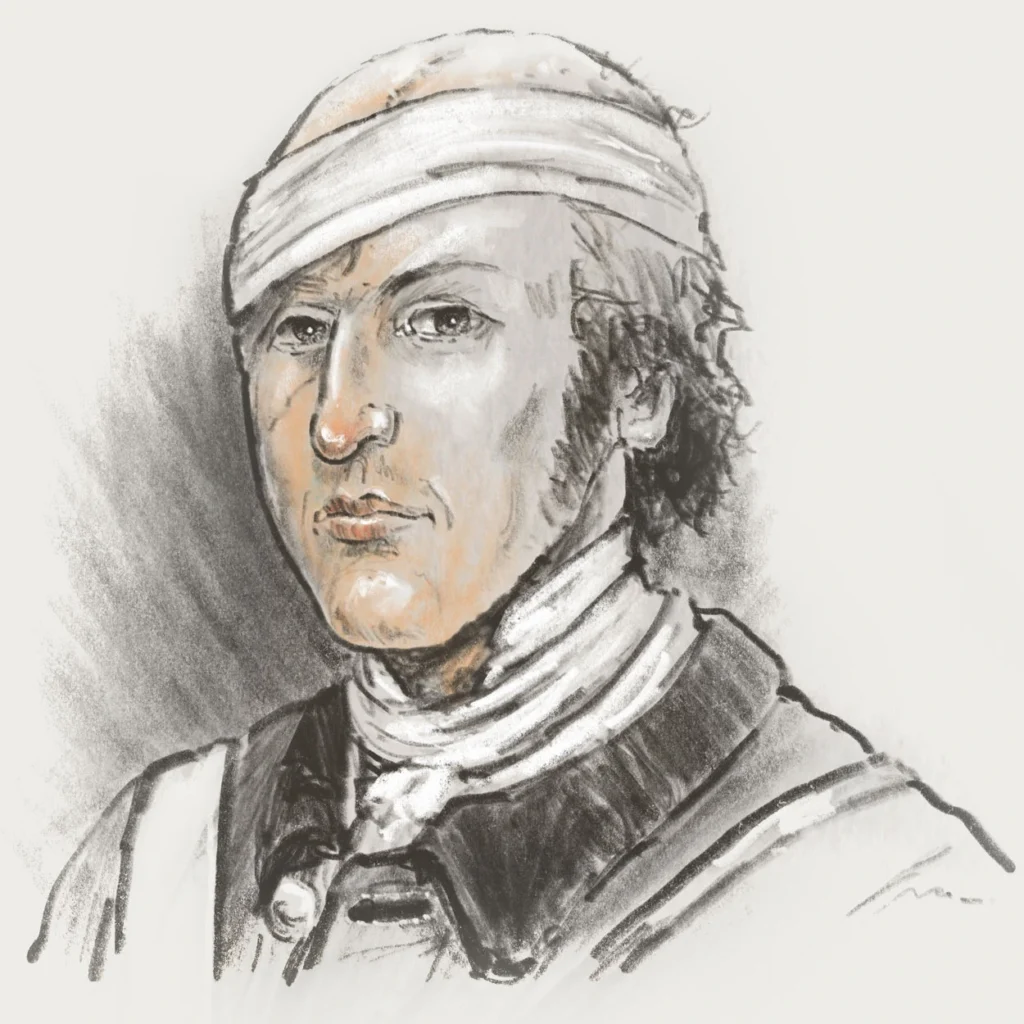
The Forge of Vengeance
On August 2, 1775, Brown’s life was irrevocably altered. A mob of over 130 “Sons of Liberty” descended on his estate, demanding he swear allegiance to the Patriot cause. When Brown defiantly refused, the encounter turned sadistic. He was severely beaten, partially scalped, and subjected to the torture of being tarred and feathered. The assault left him with a fractured skull, lifelong debilitating headaches, and the loss of two toes. Rather than breaking his spirit, the trauma forged a resolute and vengeful warrior. Brown fled to East Florida, carrying both his physical scars and an unshakeable loyalty to the Crown.
Commander of the King’s Rangers
From his base in Florida, Brown became a master of frontier and partisan warfare. Commissioned as a Lieutenant Colonel, he raised the King’s Carolina Rangers, a fierce Loyalist unit that became the primary antagonist for Patriot militia in the Beaufort and Jasper Districts. Appointed Superintendent of Indian Affairs in 1779, Brown leveraged deep strategic alliances with the Creek and Cherokee nations, integrating Native American tactics into British operations.
His Rangers were ubiquitous in the Lowcountry conflict, participating in the Siege of Savannah and the bloody defense of Augusta. To his enemies, he was “Bloody Brown,” a man accused of summary executions and brutal retaliatory strikes. To his supporters, he was a tireless officer who adhered to a strict military code in a region where “civilized” war had long since vanished.
Exile and an Unexpected Legacy
Following the British evacuation of the South, Brown’s war moved to the Caribbean. The British government compensated his loss of American lands with extensive grants in the Caicos Islands and Saint Vincent. He transitioned back to the life of a planter, establishing sugar and cotton estates powered by hundreds of enslaved laborers. Even in exile, his penchant for ambitious projects remained; he oversaw the construction of the Black Point Tunnel in Saint Vincent, a massive engineering feat designed to modernize his estate’s transport.
Thomas Brown died in 1825, never having returned to the American soil where his personal war began. His legacy remains a stark reminder of the “Price of Loyalty” and the brutal cycles of violence that defined the Revolution in the South.