Thomas Heyward Jr.
Thomas Heyward Jr.: The Soldier-Signer
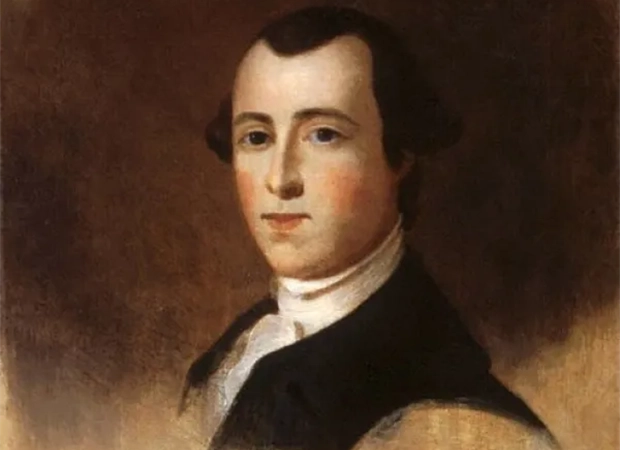
Thomas Heyward Jr. (1746–1809) was one of the few men in history to pair the stroke of a pen on the Declaration of Independence with the command of a battery in the field. Born at Old St. Luke’s Parish in the Beaufort District, he was the son of one of the wealthiest planters in the colony. After studying law in London, Heyward returned to South Carolina, where his burgeoning legal career was quickly eclipsed by the call for revolution. He was elected to the Continental Congress and, at just thirty years old, immortalized his name by signing the Declaration in 1776.
Combat and Capture at Port Royal Island
Heyward was not content to remain in Philadelphia while his home district was under threat. He returned to South Carolina and took up a commission as a Captain in the Charleston Battalion of Artillery. His most significant military contribution occurred on February 3, 1779, at the Battle of Port Royal Island (Gray’s Hill). Fighting alongside fellow signer Edward Rutledge and General William Moultrie, Heyward commanded the artillery that proved decisive in forcing the British regulars to retreat. During the heat of the engagement, he was wounded in the leg, but his presence on the field provided an immense morale boost to the local militia.
The Price of Rebellion
The British viewed Heyward with particular disdain due to his status as a “Signer.” When Charleston fell in May 1780, Heyward was captured and subsequently sent to the grim military prison at St. Augustine, Florida. While he was in captivity, the British took their revenge on his property. His elegant White Hall Plantation in the Beaufort District was systematically plundered and burned to the ground by British raiding parties. His wife, Elizabeth, reportedly died in Philadelphia during his imprisonment, adding a profound personal tragedy to his financial ruin.
Legacy of the Jurist-Patriot
Following his exchange in 1781, Heyward returned to South Carolina to help rebuild the state’s legal and political infrastructure. He served as a judge and was a key member of the Jacksonborough Assembly in 1782, helping to navigate the complex legalities of post-war confiscation and reconciliation. Though he eventually retired to a new home at White Hall to rebuild his life as a planter, he remained a living symbol of the “Soldier-Signer”—a man who proved that the pursuit of liberty required the sacrifice of both fortune and blood.